Hiroshima Okonomiyaki
広島お好み焼き
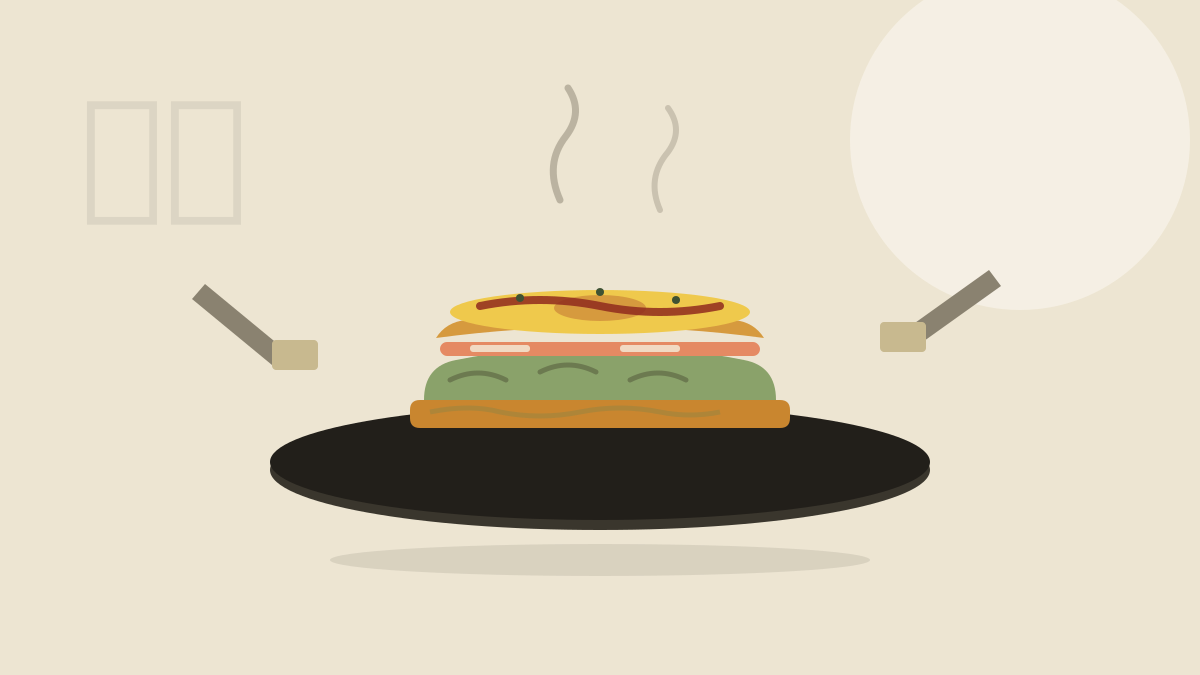
Hiroshima's layered griddle icon — crepe, a mountain of cabbage, pork, yakisoba, and egg, never mixed. Born of issen-yōshoku and the postwar griddles.
By Japanese Cookbook Kitchen · May 4, 2026
中国 ChūgokuShōwa era, 1926–1989
 居酒屋
居酒屋- Prep
- 25 min
- Cook
- 20 min
- Serves
- 2
- Level
- Intermediate
Before the war, Hiroshima's children ate issen-yōshoku — "one-sen Western food" — a thin crepe smeared with sauce and folded over scraps of scallion, sold at candy shops for a single sen. After August 1945, that humble snack became infrastructure. In a flattened city, flour from American aid rations was one of the few reliable foods, and survivors set up griddles amid the rubble, padding the old crepe with whatever grew fast and cheap — which in Hiroshima meant cabbage, mountains of it. Add pork when times improved, then yakisoba noodles in the early 1950s, and the crepe had become a meal.
What never changed was the architecture. Hiroshima okonomiyaki is layered, never mixed — a discipline locals defend with real heat, because the layers are the point. The crepe works as a lid, trapping steam that collapses a tower of raw cabbage into something sweet and silky; the noodles underneath fry into a crisp foundation; the egg holds the roof on. Today the city has more okonomiyaki shops per capita than anywhere in Japan, and an entire building — Okonomimura — dedicated to griddles. Ours fits in a home frying pan, flipped with more courage than grace.
The whole dish is a bet that steam trapped under a thin crepe will collapse a fist-high pile of cabbage into silk. Don't press early, don't peek, and never — in front of anyone from Hiroshima — call it mixed.
板前の一言 · A word from the kitchen
Ingredients材料
Serves 2
Batter (the crepe)
- 100 gplain flour
- 130 mlwater
- 1 tspmirin — a Hiroshima shop trick — a whisper of sweetness helps the crepe brown evenly
The layers
- 300 ggreen cabbage, sliced into fine ribbons — slice, don't chop — long thin ribbons steam down evenly where chunks stay squeaky
- 60 gbean sprouts
- 120 gthinly sliced pork belly
- 2 portionsfresh yakisoba noodles
- 2eggs
- 2 tbsptenkasu (tempura crumbs)
- 2scallions, finely sliced
To finish
- 4 tbspokonomiyaki sauce — Otafuku if you can get it — the company is Hiroshima's, and the sauce was formulated for exactly this dish in the early 1950s
- aonori and katsuobushi
Method作り方
Step 1: Make a thin batter and rest it
Whisk flour, water, and mirin until just smooth and rest 20 minutes. This is crepe batter, not pancake batter — it should pour like single cream, because its only job is to become a lid.
Step 2: Lay the crepe and build the mountain
Heat a large flat pan or griddle to medium and ladle half the batter into a thin 20 cm circle. Immediately pile on half the cabbage, sprouts, tenkasu, and scallion, then lay pork belly slices over the top. It will look absurdly tall. Good.
Step 3: Flip and let steam do the work
Drizzle a teaspoon of batter over the pile to glue it, then flip the whole thing in one committed motion so the pork hits the pan. Leave it alone 8–10 minutes. The crepe traps steam and the cabbage collapses to a third of its height — pressing now just squeezes out the juice you're trying to keep.
Step 4: Fry the noodles and stack
Beside it, fry the yakisoba noodles with a splash of sauce until edged with crisp. Slide the cabbage stack, pork side down, onto the noodle disc.
Step 5: Finish on the egg
Crack an egg onto the griddle, break the yolk, spread it roughly to the size of your stack, and immediately move the whole stack on top. When the egg sets, flip once more so the egg crowns the summit.
Step 6: Sauce and serve
Paint generously with okonomiyaki sauce, scatter aonori and katsuobushi, and serve straight from the griddle. In Hiroshima you'd eat it with a metal hera, no plate — at home, a spatula and low ceremony will do.
道具 · The tools
Equipment
Flat griddle / teppan
鉄板A wide flat surface for okonomiyaki, monjayaki, and yakisoba — cast iron or an electric hot plate.
Shop on Amazon →Mandoline (benriner)
スライサーPaper-thin daikon, cucumber, and cabbage in seconds — the Japanese mandoline home cooks actually own.
Shop on Amazon →
Equipment links are Amazon affiliate links. As an Amazon Associate we earn from qualifying purchases, at no cost to you. Disclosure.
Questions from the kitchen
What makes Hiroshima okonomiyaki different from Osaka's?
Architecture. Osaka mixes everything into one batter; Hiroshima builds layers — crepe, cabbage, pork, noodles, egg — and never stirs. The result is less pancake, more mille-feuille of steam-cooked cabbage, with roughly triple the cabbage of the Kansai version.
Can I skip the noodles?
You can — the noodle-free version (soba-nashi) exists in Hiroshima too. But noodles arrived in the early 1950s, most famously credited to the shop Micchan, and they're now considered the identity of the dish. Udon instead of yakisoba is a legitimate local variant, not a compromise.
I can't flip a fist-high pile of cabbage. Help?
Use two spatulas, commit fully, and accept that shops train for years. An honest workaround is to invert a plate over the stack, flip pan and plate together, and slide it back. Escaped cabbage can simply be tucked back under the crepe — the steam forgives everything.
次はこちら · Cook next
Keep the burner on
 居酒屋
居酒屋Izakaya · 25 min · Beginner
Gōya Chanpurūゴーヤーチャンプルー
Okinawa's bitter melon stir-fry with tofu, pork, and egg — the Ryūkyū Kingdom's everyday masterpiece, and the honest way to make peace with gōya.
 居酒屋
居酒屋Izakaya · 40 min · Beginner
Osaka Okonomiyakiお好み焼き
Osaka's cabbage-and-batter griddle cake with pork belly, sauce, and dancing katsuobushi — postwar street food perfected. Dashi in the batter is the difference.
 居酒屋
居酒屋Izakaya · 35 min · Intermediate
Chicken Karaage鶏の唐揚げ
Japanese fried chicken with a soy-ginger marinade, a potato-starch crust, and the double-fry that keeps it crackling — izakaya standard, home method.