Hirayāchī
ヒラヤーチー
Okinawa's thin, savory typhoon pancake — flour, water, egg, and chives, cooked in one pan when the power might go out. The island's most practical comfort food.
By Japanese Cookbook Kitchen · June 6, 2026
沖縄 OkinawaShōwa era, 1926–1989
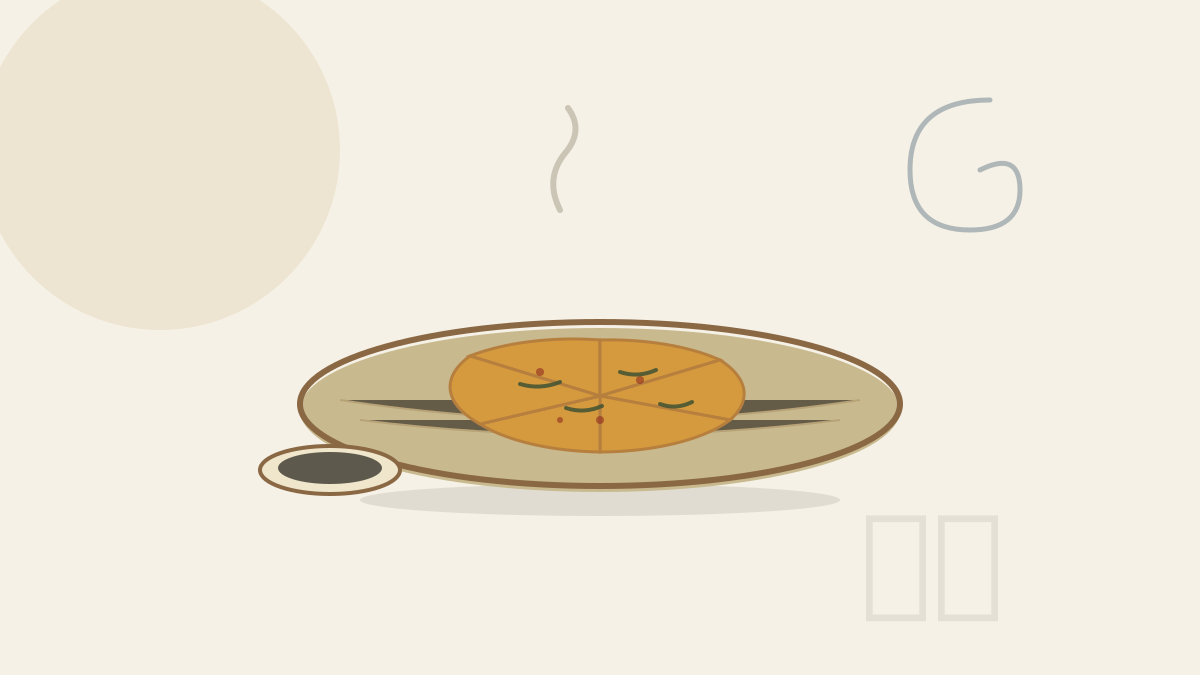 居酒屋
居酒屋- Prep
- 8 min
- Cook
- 10 min
- Serves
- 2
- Level
- Beginner
Hirayāchī is Okinawa's most honest comfort food — a thin savory pancake of flour, water, egg, and garlic chives, cooked flat in a single pan. Its name is island dialect for something like "flat fry," and its reputation is inseparable from weather: this is what Okinawan families cook when a typhoon has the shutters up and the power might cut out at any moment. Flour keeps on the shelf, water comes from the tap, an egg and a handful of nira finish it, and one burner does the rest. In a place that takes some of Japan's fiercest storms, that practicality is a kind of genius.
It belongs to the everyday Shōwa-era kitchen rather than the court — no lineage, no ceremony, just resourcefulness. Keep the batter thin and the pan hot, and you get something flat, faintly chewy, and deeply satisfying, cut into wedges and dipped in soy. Nira is traditional, but the real recipe is "whatever won't survive a blackout," which is exactly why it has kept its place on the table long after the lights came back.
Keep the batter thin and the pan hot — hirayāchī is meant to be flat and a little chewy, not a fat fluffy okonomiyaki. Thin is the whole idea.
板前の一言 · A word from the kitchen
Ingredients材料
Serves 2
- 120 gplain flour
- 180 mlwater — or dashi if you have it; water is the honest typhoon version
- 1egg
- 1 tspdashi granules — optional, for depth when you're using plain water
- 1 handfulnira (garlic chives), chopped — scallions or canned tuna work when nira is gone — this is a use-what's-left dish
- 1 pinchsalt
- 1 tbspneutral oil
- soy sauce or Worcestershire-style sauce, to serve
Method作り方
Step 1: Make a thin batter
Whisk the flour, water, egg, dashi granules, and salt into a smooth, pourable batter — thinner than pancake batter, closer to crêpe. Lumps are fine to chase out now; you want it loose so it spreads.
Step 2: Fold in the chives
Stir the chopped nira through the batter. This is where the dish flexes: whatever green or protein you have that won't keep through a power cut can go in here.
Step 3: Cook it flat
Heat the oil in a frying pan over medium and pour in the batter, swirling to spread it thin. Cook until the underside is set and golden, about 3 minutes, then flip.
Step 4: Crisp the second side
Press the pancake down with a spatula and cook another 2–3 minutes until both faces are lightly crisp and the center is cooked through. It should be flat and a little chewy.
Step 5: Cut and serve
Slide it onto a board, cut into wedges, and eat hot with soy or a Worcestershire-style sauce. It's the thing Okinawan families make when the typhoon shutters are up and no one wants to open the fridge.
道具 · The tools
Equipment
Nonstick frying pan
フライパンFor chanpurū, gyoza, pancakes, and anything that needs a clean release and even browning.
Shop on Amazon →
Equipment links are Amazon affiliate links. As an Amazon Associate we earn from qualifying purchases, at no cost to you. Disclosure.
Questions from the kitchen
What is hirayāchī, exactly?
A thin savory pancake of flour, water, egg, and chopped nira, cooked flat in one pan. The name is Okinawan dialect for something like "flat fry." It's plainer and thinner than okonomiyaki — closer to a chive crêpe than a loaded cabbage cake.
Why is it called a typhoon food?
Because it's exactly what you can cook when a typhoon has knocked out the power and you don't want to open the fridge: shelf-stable flour, a little water, an egg, and whatever green is on hand, on a single burner. Okinawa gets serious typhoons, and hirayāchī is the pantry's answer to them.
How is it different from okonomiyaki?
Okonomiyaki is thick, packed with shredded cabbage, and piled with toppings; hirayāchī is deliberately thin, simple, and savory, leaning on chives rather than cabbage. One is a feast; the other is what you make when the lights are flickering.
次はこちら · Cook next
Keep the burner on
 居酒屋
居酒屋Izakaya · 25 min · Beginner
Gōya Chanpurūゴーヤーチャンプルー
Okinawa's bitter melon stir-fry with tofu, pork, and egg — the Ryūkyū Kingdom's everyday masterpiece, and the honest way to make peace with gōya.
 居酒屋
居酒屋Izakaya · 40 min · Beginner
Osaka Okonomiyakiお好み焼き
Osaka's cabbage-and-batter griddle cake with pork belly, sauce, and dancing katsuobushi — postwar street food perfected. Dashi in the batter is the difference.
 居酒屋
居酒屋Izakaya · 35 min · Intermediate
Chicken Karaage鶏の唐揚げ
Japanese fried chicken with a soy-ginger marinade, a potato-starch crust, and the double-fry that keeps it crackling — izakaya standard, home method.