Pan-Fried Gyoza
焼き餃子
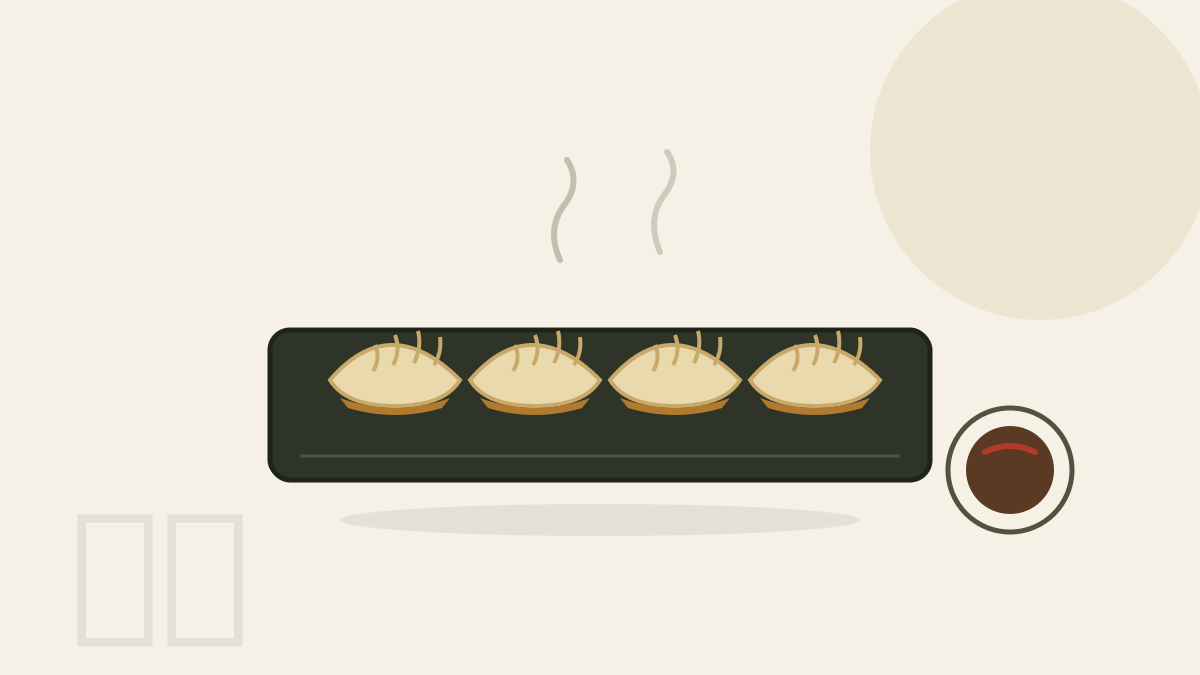
Crisp-bottomed, steam-finished pork and cabbage gyoza — the fry-steam-fry method, a pleating tutorial that forgives, and the correct dipping sauce.
By Japanese Cookbook Kitchen · June 5, 2026
 居酒屋
居酒屋- Prep
- 45 min
- Cook
- 12 min
- Serves
- 4
- Level
- Intermediate
Gyoza night is a ritual. The filling comes together in five minutes, and then you're at the table with a stack of wrappers and a small bowl of water, pleating — badly at first, then hypnotically — while whoever you live with drifts in to help and eats a third of them later as payment.
The cooking method is the part worth memorizing: fry, steam, fry. A hard sear to build the golden base, a lidded steam to cook the filling and turn the wrapper tender-translucent, then an uncovered finish to make the bottom genuinely crisp again. One pan, under ten minutes, and it produces that two-texture contrast — crackling underneath, silky on top — that defines yaki-gyoza.
Two quiet details carry the dish: squeezing the salted cabbage like you mean it, and stirring the filling until it goes sticky. Both are about water management, which is most of what dumpling mastery turns out to be.
Your first ten pleats will be ugly and your gyoza will not care. A badly pleated dumpling sealed well beats a beautiful one that leaks.
板前の一言 · A word from the kitchen
Ingredients材料
Serves 4
Filling
- 250 gground pork — not lean — you want some fat
- 200 gnapa cabbage — finely chopped, salted, and squeezed hard
- 2scallions, minced
- 1 tbspsoy sauce
- 1 tbspsake
- 2 tsptoasted sesame oil
- 1 tspgrated ginger
- 1 clovegarlic, grated
Assembly & cooking
- 30–35round gyoza wrappers
- 2 tbspneutral oil
- 100 mlhot water — per batch, for the steam
Dipping sauce
- 2 tbspsoy sauce
- 2 tbsprice vinegar
- rayu (chili oil) — to taste
Method作り方
Step 1: Fix the cabbage first
Toss the chopped cabbage with a teaspoon of salt and let it sit 10 minutes, then squeeze it in fistfuls until it has given up a shocking amount of water. Skip this and the filling steams itself soggy inside the wrapper.
Step 2: Make the filling
Combine pork, cabbage, scallions, and all seasonings, then stir with chopsticks in one direction for a full minute until the mixture turns sticky and cohesive. That tackiness is the pork's proteins binding — it keeps the filling juicy instead of crumbly.
Step 3: Fill and pleat
Set a scant tablespoon of filling in a wrapper, wet the top edge, and fold to a half-moon, pleating the front edge five or six times against the flat back and pressing each pleat closed. Line them up on a floured tray, pleats up, like little standing fans.
Step 4: Fry
Film a lidded nonstick skillet with oil over medium-high heat and arrange the gyoza flat-side down in rows or a circle. Fry 2 minutes until the bottoms are gold.
Step 5: Steam, then fry again
Pour in the hot water — it will roar — clap on the lid, and steam 5 minutes until the wrappers turn translucent. Uncover, let the last water evaporate, add a thread of oil, and fry 1 to 2 minutes more until the bottoms are deeply crisp. Invert onto a plate, brown side up.
Step 6: Sauce and serve
Stir soy and vinegar together — more vinegar than feels right is right — and add rayu with intent. Serve straight from the pan-side.
道具 · The tools
Equipment
Nonstick frying pan
フライパンFor chanpurū, gyoza, pancakes, and anything that needs a clean release and even browning.
Shop on Amazon →Grater (oroshigane)
おろし金Fine, wet grating for ginger, daikon oroshi, and fresh wasabi — a Western microplane is close.
Shop on Amazon →Cooking chopsticks (saibashi)
菜箸Long chopsticks for turning, plating, and beating eggs streaky — the Japanese kitchen’s default hand.
Shop on Amazon →
Equipment links are Amazon affiliate links. As an Amazon Associate we earn from qualifying purchases, at no cost to you. Disclosure.
Questions from the kitchen
Can I freeze gyoza?
They freeze beautifully — raw, on a floured tray until solid, then bagged. Cook straight from frozen with the same fry-steam-fry, extending the steam by 2 to 3 minutes. Never thaw first; they turn to glue.
What's the difference between gyoza and Chinese jiaozi?
Gyoza is Japan's postwar adaptation of jiaozi — a thinner wrapper, a garlic-forward filling, and an obsession with the crisp pan-fried bottom (yaki-gyoza) rather than boiling. Same family, different accent.
My bottoms burn before the filling is cooked. What's wrong?
Heat too high, or the steam skipped. The water isn't optional — the 5 minutes under the lid is what cooks the pork. The final fry only re-crisps what the steam softened; it should take 90 seconds, not five minutes.
次はこちら · Cook next
Keep the burner on
 居酒屋
居酒屋Izakaya · 25 min · Beginner
Gōya Chanpurūゴーヤーチャンプルー
Okinawa's bitter melon stir-fry with tofu, pork, and egg — the Ryūkyū Kingdom's everyday masterpiece, and the honest way to make peace with gōya.
 居酒屋
居酒屋Izakaya · 40 min · Beginner
Osaka Okonomiyakiお好み焼き
Osaka's cabbage-and-batter griddle cake with pork belly, sauce, and dancing katsuobushi — postwar street food perfected. Dashi in the batter is the difference.
 居酒屋
居酒屋Izakaya · 35 min · Intermediate
Chicken Karaage鶏の唐揚げ
Japanese fried chicken with a soy-ginger marinade, a potato-starch crust, and the double-fry that keeps it crackling — izakaya standard, home method.