Dashimaki Tamago
だし巻き卵
Kyoto's rolled omelet saturated with awase dashi — barely sweet, quivering, poured and rolled in rhythm. The foundation skill of the Kansai kitchen.
By Japanese Cookbook Kitchen · June 2, 2026
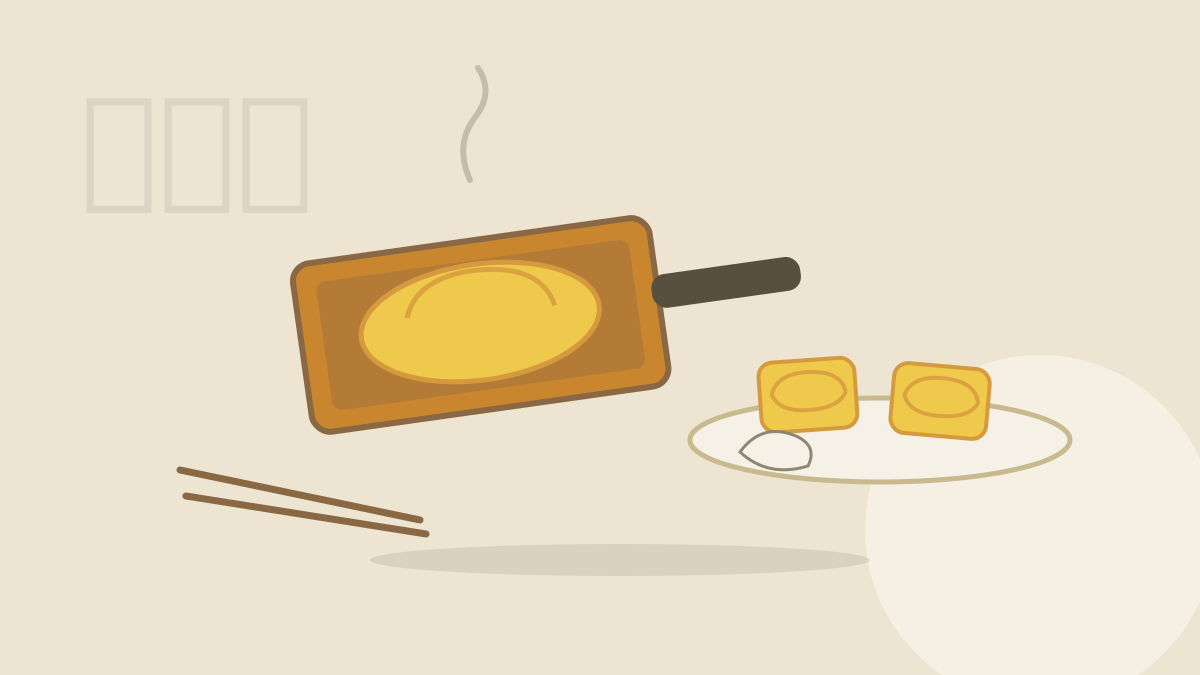 基本
基本- Prep
- 5 min
- Cook
- 15 min
- Serves
- 2
- Level
- Intermediate
Eggs were still a luxury when Edo-period Japan fell in love with them — temple restrictions on meat never quite applied, and by the late 1700s egg cookery had its own bestselling literature, including the 1785 Manpō Ryōri Himitsubako, a "secret box" of a hundred egg recipes. The rolled omelet became the form the archipelago argued over. Tokyo sweetened it into something firm and confectionary; Kyoto, a city that measures its cooking by its dashi, went the other way — less sugar, more broth, usukuchi soy for seasoning, until the omelet became a trembling vehicle for kombu and katsuobushi. In Kyoto delicatessens dashimaki is sold by the loaf, and judged the way bakers judge baguettes.
It is also the great foundation skill: one pan, two techniques — the oil-wipe and the roll — and a rhythm your hands memorize before your head does. Pour thin, roll while the surface is still wet, slide, oil, pour again. The reward for practice is absurdly out of proportion to the ingredient list, which is why a cook in Kansai can be measured, fairly or not, by this dish alone. Grated daikon on the side is traditional, and its job is contrast — cold and sharp against warm and rich. Attempt four is when it clicks.
Your first three dashimaki will be ugly and delicious. Roll them anyway, square them in a sushi mat while hot, and nobody at the table will ever know. The pan learns your hand around attempt four.
板前の一言 · A word from the kitchen
Ingredients材料
Serves 2
- 4eggs
- 120 mlawase dashi — cooled — this is a 1:2 dashi-to-egg ratio by volume, the Kyoto end of the spectrum; start at 90 ml if it's your first roll
- 1 tspusukuchi (light) soy sauce
- 1 tspmirin
- ¼ tspsalt
- neutral oil, and a wad of paper towel to apply it
- 5 cmdaikon, grated and lightly squeezed, to serve
Method作り方
Step 1: Mix without whipping
Beat the eggs with chopsticks in a cutting motion — you want the whites broken and blended, not aerated. Stir in the cooled dashi, soy, mirin, and salt. Strain the mixture once through a sieve; it is thirty seconds that buys you a perfectly even custard.
Step 2: Season the pan
Heat a makiyakinabe — the rectangular rolled-omelet pan — over medium and wipe it thoroughly with an oiled paper towel. Test with a drop of egg; it should sizzle and set at once. Re-oil with the same wad before every single pour, edges and corners included.
Step 3: First pour, first roll
Pour in a thin layer, tilting to coat. When the surface is set below but still wet on top, roll it away from you — or toward you, pick a direction and keep it for life — in two or three brisk folds. Wet is the word: the raw surface is the glue between layers.
Step 4: Build the roll in rhythm
Slide the roll to the far end, oil the empty pan, and pour the next layer, lifting the roll so batter runs underneath it. Roll the whole thing back over the new layer. Repeat 4 or 5 times until the egg is used. The rhythm matters more than any single fold — pour, lift, set, roll, slide.
Step 5: Rest, slice, serve
Tip the roll onto a sushi mat and wrap for 2 minutes — it sets the shape and finishes the center with carryover heat. Slice thick and serve warm with grated daikon and a few drops of soy. It should tremble when the plate lands.
道具 · The tools
Equipment
Portable gas burner
カセットコンロThe tabletop butane burner that turns any nabe into a shared meal — cook and eat from the same pot.
Shop on Amazon →Shamoji (rice paddle)
しゃもじThe flat paddle for folding and cooling seasoned rice with a cutting motion — never a mash.
Shop on Amazon →Makisu (bamboo mat)
巻きすFor rolling maki and shaping pressed sushi — the cheap tool that unlocks a dozen dishes.
Shop on Amazon →Fine sieve / muslin
こし器For straining dashi clear and dusting flour — line it with muslin or paper for the cleanest stock.
Shop on Amazon →Grater (oroshigane)
おろし金Fine, wet grating for ginger, daikon oroshi, and fresh wasabi — a Western microplane is close.
Shop on Amazon →Cooking chopsticks (saibashi)
菜箸Long chopsticks for turning, plating, and beating eggs streaky — the Japanese kitchen’s default hand.
Shop on Amazon →
Equipment links are Amazon affiliate links. As an Amazon Associate we earn from qualifying purchases, at no cost to you. Disclosure.
Questions from the kitchen
What makes this different from ordinary tamagoyaki?
The dashi, and the quantity of it. Sweet Kanto-style tamagoyaki is firm, sugary, and sliceable; Kyoto-style dashimaki carries so much dashi — up to a third of its volume — that it barely holds itself together, and it is seasoned with usukuchi soy rather than sugar. One is a snack. The other is a custard doing an impression of an omelet.
Do I need the rectangular pan?
For the true layered roll, it helps enormously — the straight sides make even layers and clean folds. A small nonstick round skillet can produce a respectable oval version; trim the curved ends and call it chef's privilege. Kansai pans are rectangular and wider than Tokyo's square ones, for exactly this dish.
My roll keeps tearing when I fold it. What's wrong?
Usually one of three things: the pan is too hot, so the layer is dry before you fold; too little oil between pours, so it sticks and rips; or you've maxed out the dashi on an early attempt. Drop the heat, re-oil obsessively, and work up to the full ratio over a few tries.
次はこちら · Cook next
Keep the burner on
 基本
基本Foundations · 15 min · Beginner
Everyday Miso Soup味噌汁
Tofu-and-wakame miso soup built on real dashi — with the one rule that separates good miso soup from great, and why the miso goes in last.
 基本
基本Foundations · 25 min · Beginner
Awase Dashi, the Proper Way合わせ出汁
The kombu-and-katsuobushi stock underneath nearly all Japanese cooking, made properly in twenty-five minutes — and why it refuses to be rushed.
 基本
基本Foundations · 20 min · Beginner
Shibazuke Quick Pickles柴漬け
Ōhara's violet eggplant-and-shiso pickle from north Kyoto — a fast vinegar version for tonight, plus the honest path to a true lactic ferment.