Chinsukō
ちんすこう
Okinawa's royal shortbread — flour, lard, and sugar, nothing hidden. A sweet from the Ryūkyū court confectioners that became the island's signature souvenir.
By Japanese Cookbook Kitchen · May 22, 2026
沖縄 OkinawaRyūkyū Kingdom era, 1429–1879
 甘味
甘味- Prep
- 20 min
- Cook
- 20 min
- Serves
- 24
- Level
- Beginner
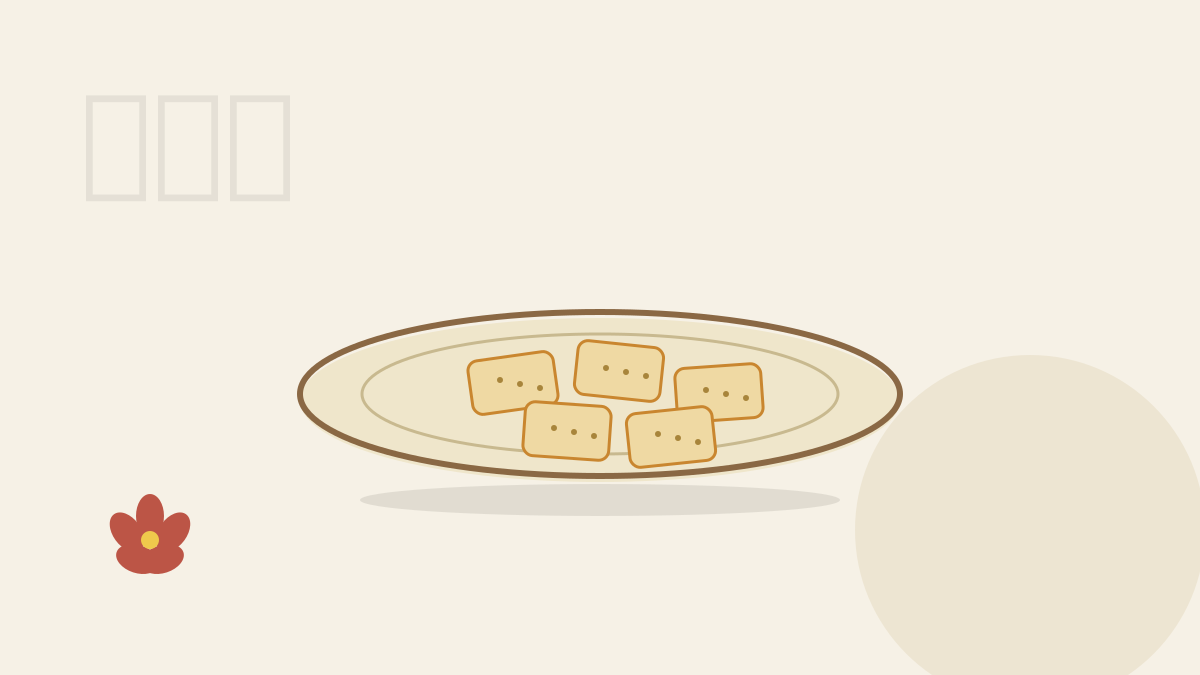
Chinsukō is honesty in cookie form: flour, lard, and sugar, pressed into small firm pieces and baked pale. It began in the royal kitchens of the Ryūkyū Kingdom (1429–1879), where court confectioners produced it as a luxury for the nobility and for the Chinese envoys the kingdom hosted as a tributary state. Sugar and refined flour were expensive, and lard — Okinawa's abundant pork fat — gave the sweet its clean, faintly savory richness. It was, for a long time, a food of the court and the ceremony rather than the street.
When the kingdom ended and its court dispersed, chinsukō spread outward and became something Okinawa gives to visitors — today it's the island's signature souvenir, boxed in every airport. But the recipe never grew fussy. There's no butter to brown, no leavening to fret over, nothing to hide behind: you cream lard with sugar, press in soft flour, and bake low so the crumb stays short and sandy. Eat one with sanpin-chā and you're tasting a court sweet that never forgot what it was made of.
Lard is not a shortcut here — it is the flavor. Butter makes a fine cookie but a different one; chinsukō's clean, faintly savory richness comes from rendered pork fat and nothing else.
板前の一言 · A word from the kitchen
Ingredients材料
Serves 24
- 200 gcake flour — low-protein soft flour keeps the crumb short and tender
- 80 gpowdered sugar
- 90 glard — rendered pork lard, softened to room temperature — the whole point of the cookie
- 1 pinchsalt
- a drop of vanilla or a little kokutō syrup, optional
Method作り方
Step 1: Cream the lard and sugar
Beat the softened lard with the powdered sugar and salt until pale and smooth. You're not aerating it like butter — just working it soft enough to carry the flour evenly.
Step 2: Work in the flour
Sift in the cake flour and fold and press until it comes together into a stiff, slightly crumbly dough. Handle it as little as possible; overworked dough bakes tough instead of sandy.
Step 3: Shape the cookies
Press the dough firmly into small rectangular or round pieces about 1 cm thick — a mold gives the traditional look, but a knife and your hands are fine. Prick the tops so they bake flat.
Step 4: Bake low and slow
Bake at 160°C for about 18–20 minutes until the cookies are set and just barely blond at the edges. They should stay pale — chinsukō is not meant to brown like a Western shortbread.
Step 5: Cool completely
Let them cool fully on the tray, where they firm up into their characteristic crumbly snap. Warm from the oven they'll seem fragile; cooled, they're perfect with sanpin-chā.
道具 · The tools
Equipment
Fine sieve / muslin
こし器For straining dashi clear and dusting flour — line it with muslin or paper for the cleanest stock.
Shop on Amazon →
Equipment links are Amazon affiliate links. As an Amazon Associate we earn from qualifying purchases, at no cost to you. Disclosure.
Questions from the kitchen
Why lard instead of butter?
Because that's the original, and it tastes different — cleaner and faintly savory, with a shorter crumb. Chinsukō was a Ryūkyū court sweet built on the ingredients the kingdom had in abundance, and pork fat was one of them. Butter versions exist, but they're a modern compromise.
Where does chinsukō come from?
From the royal kitchens of the Ryūkyū Kingdom, where court confectioners made it as a luxury sweet for the nobility and for Chinese envoys. After the kingdom ended it spread beyond the court, and it's now Okinawa's most recognizable edible souvenir, sold in every airport shop.
My chinsukō came out hard, not crumbly. Why?
You likely overworked the dough or used bread flour instead of soft cake flour, developing gluten that has no place here. Mix just until it coheres, use low-protein flour, and keep the oven gentle so they set without toughening.
次はこちら · Cook next
Keep the burner on
 甘味
甘味Sweets & Wagashi · 45 min · Beginner
Matcha Basque Cheesecake抹茶バスクチーズケーキ
The burnt Basque cheesecake that conquered Reiwa-era Japan, rebuilt with ceremonial matcha — scorched top, molten center, and green-tea bitterness doing the work of coffee.
 甘味
甘味Sweets & Wagashi · 60 min · Beginner
Aomori Baked Apples焼きりんご
Aomori Fuji apples baked with butter and honey until collapsing and caramelized — a Meiji-era orchard sweet from Japan's apple country, warm from the oven.
 甘味
甘味Sweets & Wagashi · 35 min · Beginner
Dorayakiどら焼き
Honey-sweet pancake sandwiches filled with red bean paste — a beloved wagashi you can make in a skillet, plus a quick anko from canned azuki.