Chanchan-yaki
ちゃんちゃん焼き
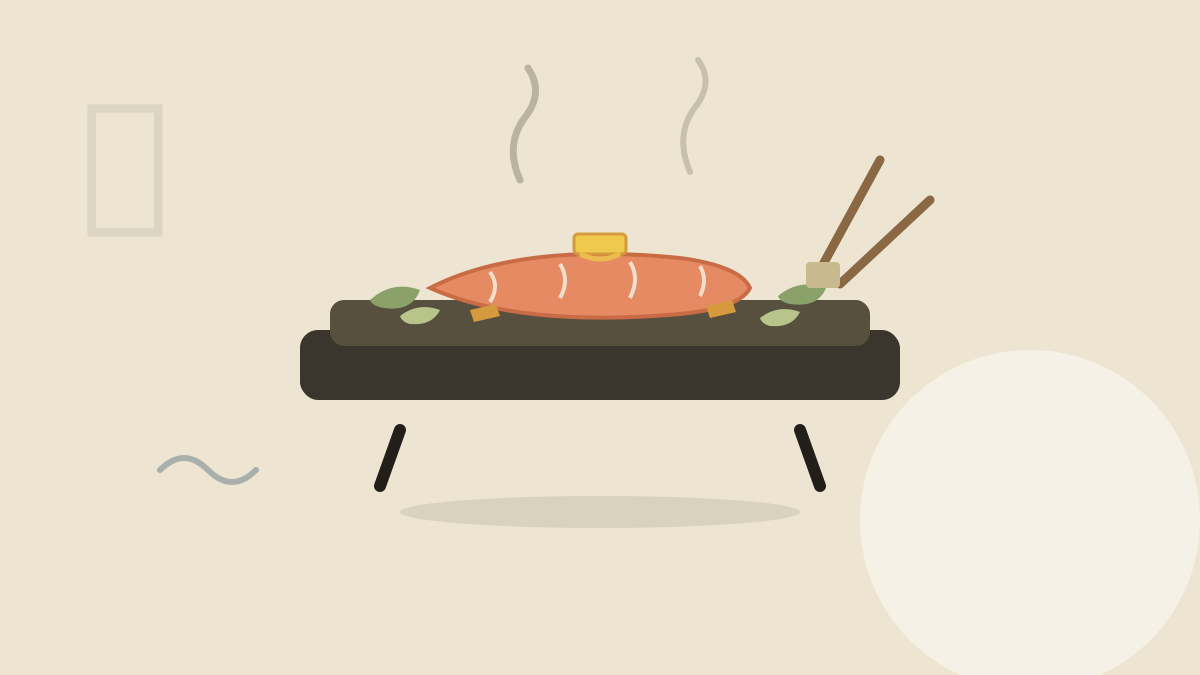
Hokkaidō fishermen's griddle feast — a whole salmon fillet steamed under a heap of vegetables, then dressed in miso butter. One pan, twenty minutes, zero ceremony.
By Japanese Cookbook Kitchen · May 13, 2026
北海道 HokkaidōShōwa era, 1926–1989
 居酒屋
居酒屋- Prep
- 15 min
- Cook
- 20 min
- Serves
- 4
- Level
- Beginner
Chanchan-yaki began wherever salmon boats landed along the Hokkaidō coast — the crews cooked their unsellable fish on whatever metal was handy, an oil drum lid or the boat's own griddle, with vegetables from the nearest field and a slick of miso. It's Shōwa-era working food from the same salmon economy that gave the Ishikari River its fame, and it never really moved indoors: the classic version is still cooked on a teppan at fishing-port restaurants, and in 2007 the agriculture ministry canonized it among Japan's hundred great rural dishes.
The method is one of the smartest in the salmon repertoire. The fish sears skin-down and then steams under a mountain of cabbage and onions, so it cooks gently while the vegetables drink the miso. The butter lands last, melting into the sauce as the whole pan hits the table. Everyone digs in with a spoon, and the crisped, miso-lacquered skin at the bottom goes to whoever is quickest — fishermen's rules.
Resist the urge to flip the salmon. It cooks skin-down the whole way, steaming under its blanket of vegetables — the skin sacrifices itself to the pan so the flesh never has to.
板前の一言 · A word from the kitchen
Ingredients材料
Serves 4
Miso butter sauce
- 4 tbspmiso — an everyday awase miso is right here — this is boat cooking, not kaiseki
- 2 tbspsake
- 1 tbspmirin
- 1 tbspsugar
- 30 gbutter
The griddle
- 600 gsalmon fillet — one large skin-on piece if you can get it — the presentation is the whole fillet, flaked at the table
- 1/4 headcabbage, in rough squares
- 1onion, thinly sliced
- 200 gbean sprouts
- 1/2carrot, in thin half-moons
- 1negi, sliced on the bias
- 1 tbspneutral oil
- salt and black pepper
Method作り方
Step 1: Mix the sauce
Stir the miso, sake, mirin, and sugar into a loose paste. The butter stays separate — it goes on whole at the end, where it can melt into the miso rather than vanish into the pan.
Step 2: Sear the salmon
Heat the oil in your widest lidded skillet over medium-high. Season the salmon, lay it in skin-side down, and let it sear untouched for two minutes to set the skin.
Step 3: Bury it in vegetables
Pile the cabbage, onion, sprouts, and carrot over and around the fish. It should disappear — the vegetables are the lid before the lid.
Step 4: Sauce, cover, steam
Spoon the miso sauce over the vegetables, add a splash of sake or water, cover, and cook 10 to 12 minutes over medium heat until the salmon flakes and the cabbage has collapsed into the sauce.
Step 5: Butter and break
Off the heat, set the butter on top and let it melt. Bring the pan to the table, break the fish apart with two spoons, and fold everything together so each serving gets salmon, vegetables, and miso butter.
道具 · The tools
Equipment
Nonstick frying pan
フライパンFor chanpurū, gyoza, pancakes, and anything that needs a clean release and even browning.
Shop on Amazon →Portable gas burner
カセットコンロThe tabletop butane burner that turns any nabe into a shared meal — cook and eat from the same pot.
Shop on Amazon →Flat griddle / teppan
鉄板A wide flat surface for okonomiyaki, monjayaki, and yakisoba — cast iron or an electric hot plate.
Shop on Amazon →Mandoline (benriner)
スライサーPaper-thin daikon, cucumber, and cabbage in seconds — the Japanese mandoline home cooks actually own.
Shop on Amazon →
Equipment links are Amazon affiliate links. As an Amazon Associate we earn from qualifying purchases, at no cost to you. Disclosure.
Questions from the kitchen
What does the name mean?
Nobody can quite agree — that's how you know it's a real fishermen's dish. One story says chan-chan is the clatter of spatulas on the griddle; another says it's because dad — chan, in northern dialect — does the cooking. Both are told with equal confidence along the Ishikari coast.
How official is this dish?
Official enough. In 2007 the agriculture ministry named it one of the top hundred rural local dishes of Japan, representing Hokkaidō alongside jingisukan and ishikari nabe — a bureaucratic honor for a dish invented on boat decks.
Can I use a different fish?
Salmon is the dish, but hokke, trout, or cod all take the miso-butter treatment well. Choose something that flakes; the final fold at the table is what turns a fillet into a feast.
次はこちら · Cook next
Keep the burner on
 居酒屋
居酒屋Izakaya · 25 min · Beginner
Gōya Chanpurūゴーヤーチャンプルー
Okinawa's bitter melon stir-fry with tofu, pork, and egg — the Ryūkyū Kingdom's everyday masterpiece, and the honest way to make peace with gōya.
 居酒屋
居酒屋Izakaya · 40 min · Beginner
Osaka Okonomiyakiお好み焼き
Osaka's cabbage-and-batter griddle cake with pork belly, sauce, and dancing katsuobushi — postwar street food perfected. Dashi in the batter is the difference.
 居酒屋
居酒屋Izakaya · 35 min · Intermediate
Chicken Karaage鶏の唐揚げ
Japanese fried chicken with a soy-ginger marinade, a potato-starch crust, and the double-fry that keeps it crackling — izakaya standard, home method.