Nagasaki Castella
カステラ
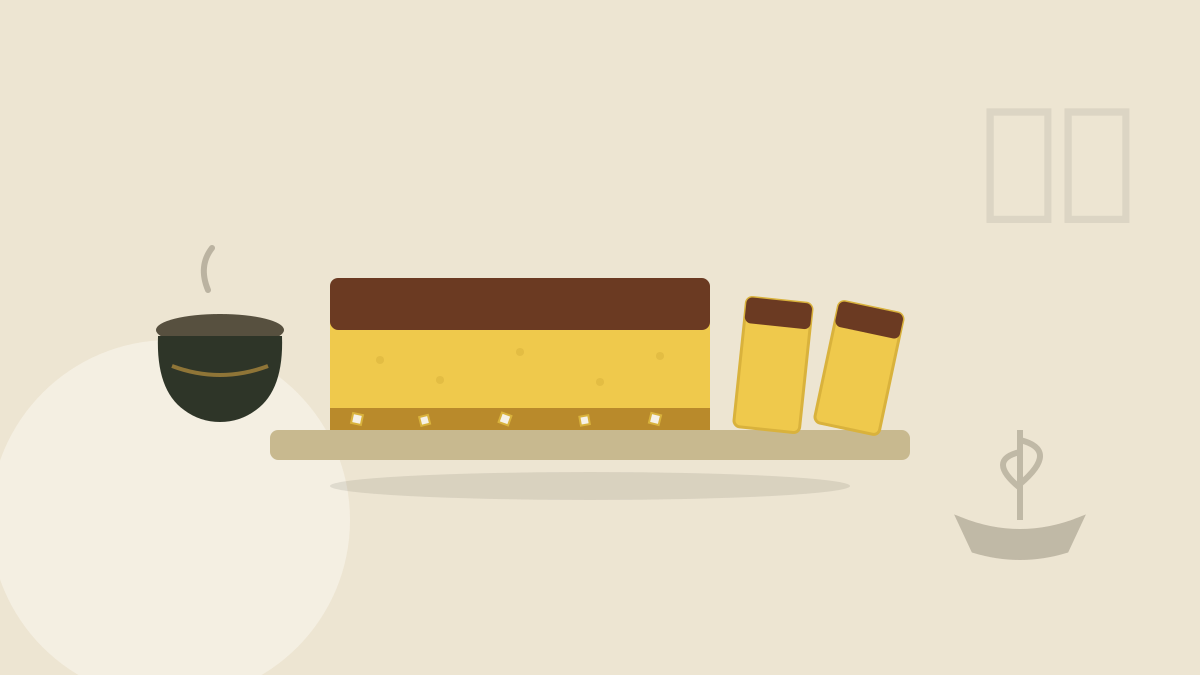
The honey sponge cake Portuguese traders brought to Nagasaki in the 1500s — bread flour, eggs, honey, and a crackle of coarse sugar on the bottom.
By Japanese Cookbook Kitchen · June 6, 2026
九州 KyūshūAzuchi-Momoyama era, 1573–1603
 甘味
甘味- Prep
- 20 min
- Cook
- 50 min
- Serves
- 8
- Level
- Intermediate
In 1543 a Portuguese ship wrecked on an island south of Kyūshū and Japanese history changed course: guns, Christianity, and — less discussed but more durable — sugar and egg-based baking all came ashore in the decades that followed. Nagasaki, the port licensed for the nanban trade during the Azuchi-Momoyama years, is where Japan learned cake. Pão de Castela became kasutera, and while Portugal eventually lost the port, Japan kept the recipe.
What four centuries of refinement produced is not a European sponge with a Japanese name. Castella is its own thing: bread flour for bounce, honey and mizuame for a moist, tight crumb, a slow bake to a mahogany crust, and coarse zarame sugar crackling along the bottom. In Nagasaki it's sold in long solemn boxes and judged with the seriousness other regions reserve for sake.
The technique asks two things of you — a genuinely thorough egg foam and the patience to wrap the cake overnight before cutting. Both are non-negotiable, and both are why homemade castella astonishes people who've only had the airport version.
Castella is patience in cake form — a long, slow bake, then a night wrapped in plastic. Cut it the day you bake it and you'll meet a drier, lesser cake than the one you made.
板前の一言 · A word from the kitchen
Ingredients材料
Serves 8
- 4eggs, room temperature
- 130 ggranulated sugar
- 2.5 tbsphoney — plus 1 tsp more, loosened with hot water, for glazing
- 1 tbspmizuame or mild syrup — optional; keeps the crumb moist for days
- 120 gbread flour — yes, bread flour — the bounce of real castella depends on it
- 2 tbspzarame (coarse crystal sugar) — for the bottom of the pan; demerara works
Method作り方
Step 1: Prepare a tall pan
Line a 20 cm square pan (or a loaf pan for a taller, more traditional shape) with parchment and scatter the zarame over the base. Heat the oven to 160°C.
Step 2: Whip the eggs like you mean it
Beat eggs and sugar over a bowl of warm water until lukewarm, then whip on high 8 to 10 minutes until tripled, pale, and thick enough to write with. Add the honey and mizuame and whip one minute more. There is no other leavening — this foam is the entire cake.
Step 3: Fold in the flour gently
Sift the bread flour over in three additions, folding with a whisk in slow strokes until just combined. Pour into the pan from a height, then drag a skewer through in a zigzag and rap the pan on the counter to break large bubbles.
Step 4: Bake low and long
Bake 50 minutes at 160°C, until deep mahogany on top and a skewer comes out clean. If the top browns too fast, tent loosely with foil at the half hour.
Step 5: Glaze, wrap, wait
Brush the hot top with the loosened honey. Turn out, and while still warm, wrap tightly in plastic and rest overnight at room temperature. The crumb settles from sponge into velvet — this rest is the recipe.
道具 · The tools
Equipment
Fine sieve / muslin
こし器For straining dashi clear and dusting flour — line it with muslin or paper for the cleanest stock.
Shop on Amazon →
Equipment links are Amazon affiliate links. As an Amazon Associate we earn from qualifying purchases, at no cost to you. Disclosure.
Questions from the kitchen
How did a Portuguese cake become a Japanese classic?
Portuguese traders and missionaries reached Kyūshū in the 1540s, and Nagasaki became the treaty port for the nanban ("southern barbarian") trade. Pão de Castela — "bread of Castile" — arrived with them; it survived because eggs and sugar did not violate Buddhist codes the way meat did, and because Japan improved it for four hundred years.
Why bread flour in a sponge cake?
Castella's texture isn't Western sponge — it's tighter, bouncier, almost mochi-adjacent at the edges. The higher gluten of bread flour plus honey and syrup gives that springy, moist chew. Cake flour makes a fine cake that is not castella.
What's the sugar on the bottom for?
Zarame is the mark of proper Nagasaki castella — coarse crystals that half-melt in the bake, leaving a faint crunch under the velvet crumb. Bottom-of-the-box zarame is the connoisseur's cut; in Nagasaki they check for it before buying.
次はこちら · Cook next
Keep the burner on
 甘味
甘味Sweets & Wagashi · 45 min · Beginner
Matcha Basque Cheesecake抹茶バスクチーズケーキ
The burnt Basque cheesecake that conquered Reiwa-era Japan, rebuilt with ceremonial matcha — scorched top, molten center, and green-tea bitterness doing the work of coffee.
 甘味
甘味Sweets & Wagashi · 60 min · Beginner
Aomori Baked Apples焼きりんご
Aomori Fuji apples baked with butter and honey until collapsing and caramelized — a Meiji-era orchard sweet from Japan's apple country, warm from the oven.
 甘味
甘味Sweets & Wagashi · 35 min · Beginner
Dorayakiどら焼き
Honey-sweet pancake sandwiches filled with red bean paste — a beloved wagashi you can make in a skillet, plus a quick anko from canned azuki.