Akashiyaki
明石焼き
Akashi's tender egg dumplings with octopus, dipped in warm dashi — the older, softer sibling of takoyaki, from a port town in western Kansai.
By Japanese Cookbook Kitchen · May 4, 2026
関西 KansaiTaishō era, 1912–1926
 居酒屋
居酒屋- Prep
- 25 min
- Cook
- 20 min
- Serves
- 3
- Level
- Intermediate
Akashi sits on the Seto Inland Sea at the western edge of Kansai, close enough to Kōbe to share its harbor light and far enough to keep its own kitchen. Its octopus is famous — muscular, sweet, worked hard by fast tidal currents through the Akashi Strait — and its egg dumplings, known locally as tamagoyaki and to the rest of Japan as akashiyaki, were being sold in the town through the Taishō era (1912–1926). That places them before takoyaki took its now-familiar shape in 1930s Osaka, which is why Akashi people, with some justification, call their dish the older sibling.
What sets akashiyaki apart is restraint. The batter is mostly egg and dashi, bound with a whisper of jinko starch for tenderness, and the finished dumpling is meant to be almost too soft to lift — a warm custard shell around a single piece of octopus. There is no sauce, no mayonnaise, no dancing bonito. Instead you dip each one into a bowl of warm awase dashi scented with scallion and mitsuba, and the seasoning happens in your hand, on the way to your mouth.
Cook them gently and expect them to wobble. If your first batch holds firm like a proper takoyaki, you've simply made takoyaki. Akashi would forgive you — but it would also, quietly, correct you.
These are meant to be barely-set custard inside a fragile shell — if they hold their shape like takoyaki, you've overcooked them. Soft to the point of nervous is correct.
板前の一言 · A word from the kitchen
Ingredients材料
Serves 3
Batter
- 4eggs
- 90 gjinko (light wheat starch) or plain flour — Akashi uses jinko, a low-protein wheat starch, for extreme tenderness; plain flour works but sits a touch firmer.
- 300 mlcold awase dashi
- 1 pinchsalt
To fill & serve
- 150 gcooked octopus, in 2 cm pieces
- neutral oil, for the pan
- 400 mlwarm awase dashi, for dipping — seasoned lightly with usukuchi soy and mirin — think a clear soup you could drink, not a sauce
- sliced scallion and mitsuba, to finish the dip
Method作り方
Step 1: Mix a batter thinner than you expect
Beat the eggs, whisk in the jinko, then loosen with the cold dashi and salt until it pours like thin cream. This is closer to savory custard than to pancake batter — the high egg and low flour are the whole point.
Step 2: Heat the pan properly
An akashiyaki pan is copper with shallow rounded wells; a takoyaki pan or even an ableskiver pan stands in. Get it medium-hot, oil each well generously, and drop a piece of octopus into each before you pour.
Step 3: Pour, then coax rather than spin
Fill the wells and let a soft skin form. Where takoyaki gets turned with a pick into crisp spheres, akashiyaki is only gently rolled — you're shaping tender custard, not building a crust. Two minutes a side is plenty.
Step 4: Serve them swimming
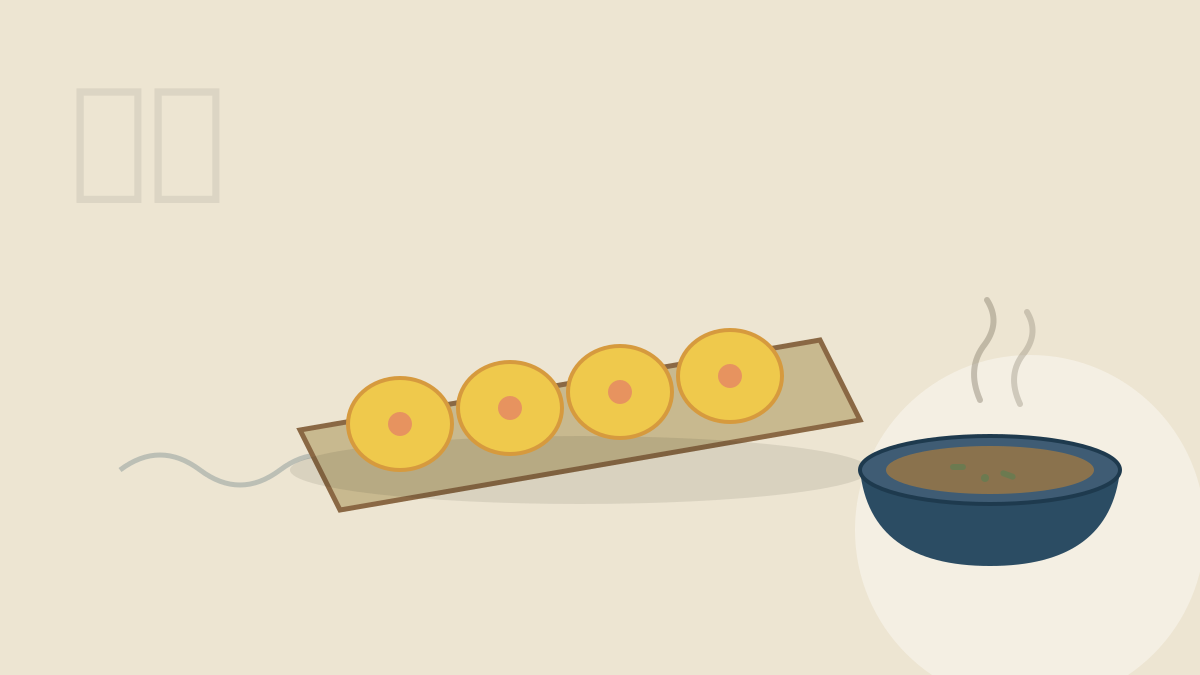
Lift the dumplings onto an angled wooden board, then dip each one into the bowl of warm dashi with scallion and mitsuba before eating. They collapse a little as you lift them. That fragility is the dish.
道具 · The tools
Equipment
Tamagoyaki pan
卵焼き器The rectangular pan that makes rolled omelet and dashimaki tamago possible.
Shop on Amazon →Takoyaki pan
たこ焼き器Half-sphere molds for takoyaki and akashiyaki — cast iron over a burner or an electric plate.
Shop on Amazon →
Equipment links are Amazon affiliate links. As an Amazon Associate we earn from qualifying purchases, at no cost to you. Disclosure.
Questions from the kitchen
Is akashiyaki just old-fashioned takoyaki?
It's the other way around. The story that Akashi's tamagoyaki (its local name) predates and inspired Osaka's takoyaki is widely told, and the timeline supports it — akashiyaki was sold in Akashi in the Taishō era, before takoyaki took its modern form in 1930s Osaka. Honestly, they're cousins with very different textures.
Why dip them in dashi instead of adding sauce?
Because the dumpling itself is barely seasoned custard, and the warm dashi is the seasoning. Sauce and mayonnaise would bury the egg. Treat the dipping bowl as an equal partner, not a garnish, and season it like a clear soup you'd happily drink.
Can I make them without the special pan?
You need rounded wells, so a takoyaki or ableskiver pan is the honest minimum. A flat pan won't give you the shape or the tenderness. If you only have a takoyaki pan, cook gentler and shorter than you would for takoyaki so they stay soft.
次はこちら · Cook next
Keep the burner on
 居酒屋
居酒屋Izakaya · 25 min · Beginner
Gōya Chanpurūゴーヤーチャンプルー
Okinawa's bitter melon stir-fry with tofu, pork, and egg — the Ryūkyū Kingdom's everyday masterpiece, and the honest way to make peace with gōya.
 居酒屋
居酒屋Izakaya · 40 min · Beginner
Osaka Okonomiyakiお好み焼き
Osaka's cabbage-and-batter griddle cake with pork belly, sauce, and dancing katsuobushi — postwar street food perfected. Dashi in the batter is the difference.
 居酒屋
居酒屋Izakaya · 35 min · Intermediate
Chicken Karaage鶏の唐揚げ
Japanese fried chicken with a soy-ginger marinade, a potato-starch crust, and the double-fry that keeps it crackling — izakaya standard, home method.